
Herramientas de IA
The Future of Artificial Intelligence and Quantum Computing According to NVIDIA 🚀

21 January 2025
 BACK
BACKIn recent years, Artificial Intelligence (AI) has transitioned from being a futuristic concept to becoming a part of everyday life. From voice assistants to content generation platforms like ChatGPT, we are immersed in what many call the era of Generative Artificial Intelligence. However, the technological future extends far beyond what we can imagine, with advancements in quantum computing and the emergence of AI agents poised to revolutionize how we work and live.
NVIDIA's Statements: Quantum Computing vs. AI
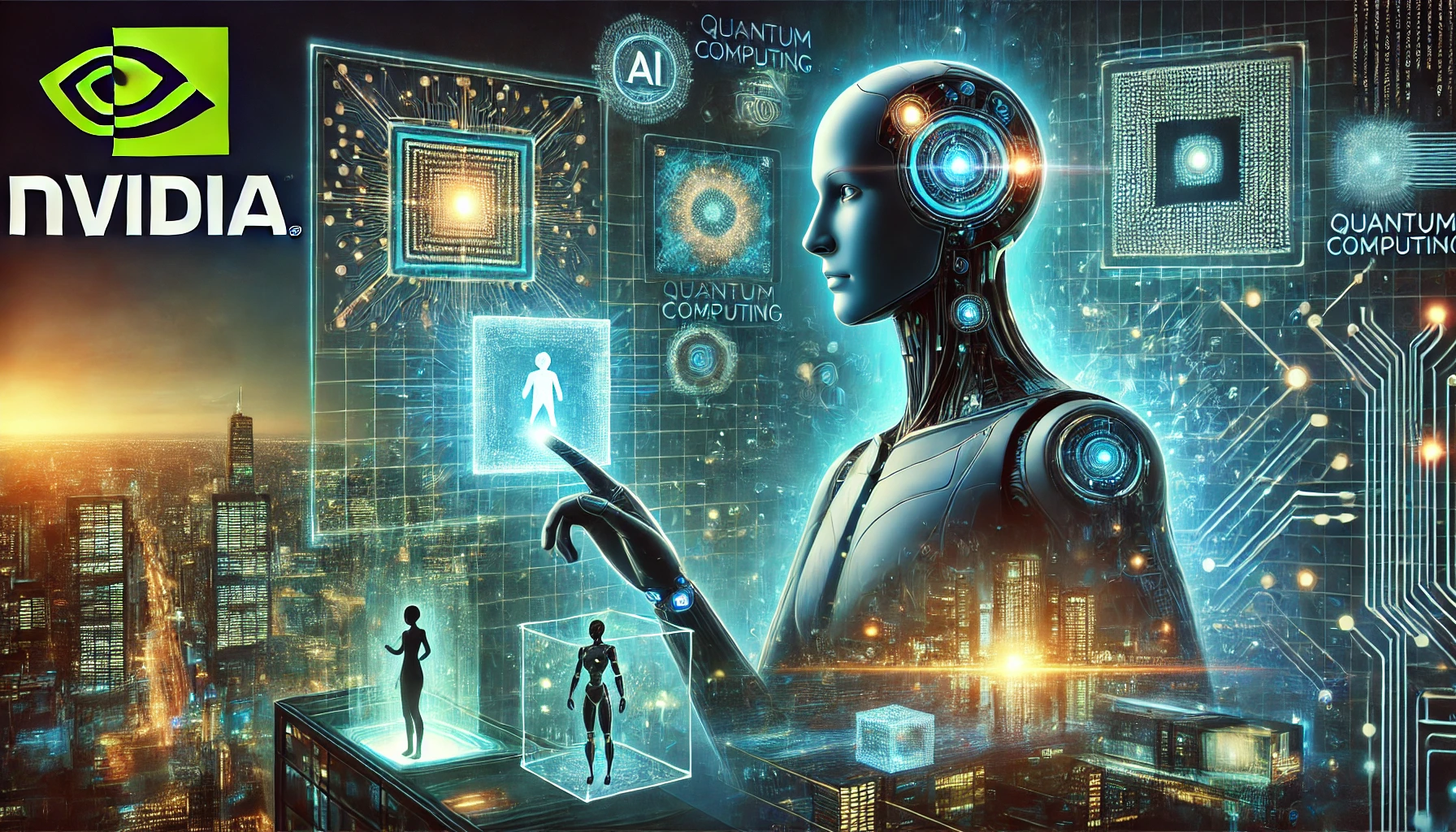
NVIDIA's CEO, Jensen Huang, recently sparked debate in the tech industry by stating that quantum computing could take 15 to 30 years to reach its full potential. This comment, seemingly critical, had an immediate impact on the stock prices of pioneering quantum computing companies, creating market uncertainty. Interestingly, shortly after, NVIDIA posted job openings for quantum computing engineers, which could be interpreted as a calculated strategy.
NVIDIA also recently introduced new chips designed to enhance the training of artificial intelligence models. This reinforces its position as a leader in processing technology, a crucial foundation for the evolution of both generative AI and future quantum systems.
AI Agents: A New Paradigm
We are currently transitioning from Generative Artificial Intelligence to a phase characterized by "AI agents." These agents are advanced systems designed to autonomously perform specific tasks, from writing marketing content to managing emails and generating videos.
An AI agent can be described as a "specialized intern" that, thanks to advanced algorithms, not only solves problems but also optimizes processes. For example, in corporate environments, AI agents can handle repetitive tasks, freeing humans to focus on more creative and strategic activities.
The Future of Quantum Computing
Although quantum computing still faces significant challenges, such as qubit stability and error correction, its potential is undeniable. A quantum computer could perform in minutes calculations that would take years with current technology. However, as Huang pointed out, the journey to "quantum supremacy"—the point where a quantum computer surpasses a classical one in solving real-world problems—is still in progress.
Reflections: The Relationship Between Humans and Technology
As technology advances, questions arise about how these innovations will impact our lives. One of the most relevant reflections is the effect on employment: Will AI agents replace human jobs, or will they become tools that enhance our productivity?
Historically, every technological revolution has eliminated certain jobs but also created new opportunities. For instance, while repetitive tasks disappear, roles that require interpretation, supervision, and management of these tools emerge.
On the other hand, we also face a philosophical challenge: What does it mean to be human in a world where machines not only work but can also "think"? This debate leads us to question our essence and how we define ourselves in relation to technology that, as one participant in the original conversation mentioned, might one day "feel mercy" for us. In this context, it is vital that the implementation of technology is accompanied by education in values that respect the diversity of cultures and human needs.
Conclusion
The advent of AI agents and advancements in quantum computing are a testament to a future that, while exciting, is also challenging. The key will be in how we adopt these technologies to improve our quality of life without losing sight of our humanity. As a society, we must reflect not only on how we use technology but also on how we want it to shape our world.