
Innovación con IA
Digital Evolution and the Cognitive Gap: Are We Ready for the Future?

05 March 2025
 BACK
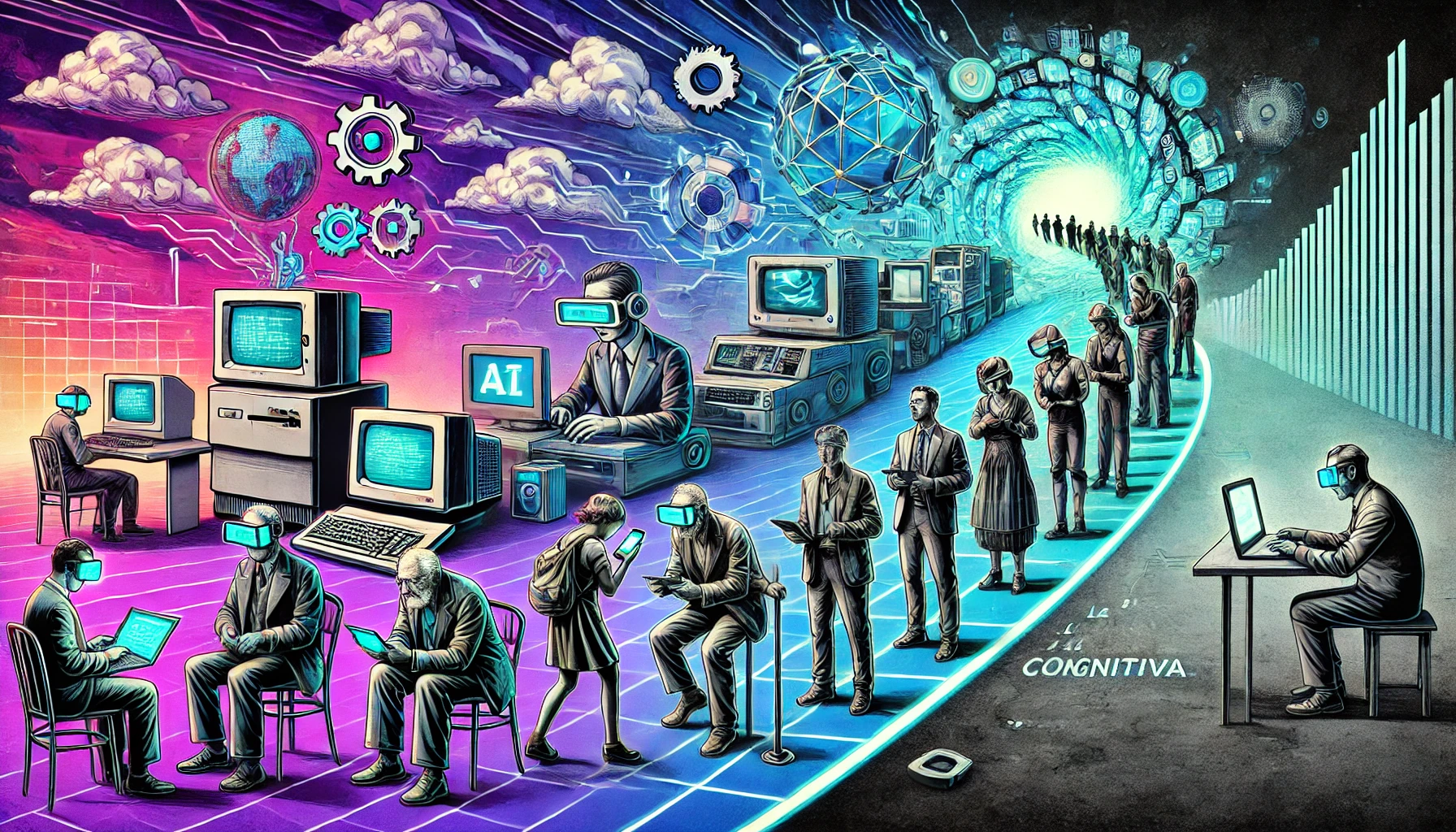
BACKTechnology has transformed the way we live, communicate, and work. As it advances, a cognitive gap is also emerging between those who embrace new tools and those who prefer to stay on the sidelines. But what impact does this have on our society and daily lives?
We live in a world where everything must be fast: instant responses, uninterrupted entertainment, and immediate solutions. This need for immediacy has reduced our tolerance for frustration and led many people to rely on technology to avoid discomfort. However, this behavior is also affecting our ability to regulate emotions and develop social skills. Instead of facing anxiety or stress in social situations, many people prefer to escape through a screen.
Artificial intelligence has revolutionized the way we work and process information. While some use it to enhance productivity and improve decision-making, others are falling behind. This difference in technological adaptation is creating a cognitive gap that could impact job opportunities and the way we interact with the world.
Despite being more connected than ever, loneliness has become a growing phenomenon. Face-to-face interactions have decreased, and it is increasingly common to see people absorbed in their devices instead of sharing moments with those around them. Spaces like coffee shops, parks, or social gatherings have changed drastically, with screens dominating over real conversations.
The future of technology is inevitable, and its impact on our lives will continue to evolve. The key is not to reject these advancements but to find a balance that allows us to take advantage of their benefits without losing our ability to connect with others and ourselves. The question is: will we be able to adapt without losing our human essence?
To learn more about this topic, you can listen to the full podcast at the following link: