
Implementación de IA
Between Generations: When Wellness Stopped Being Instant Pleasure and Became Long-Term Awareness

11 June 2025
 BACK
BACKFor decades, wellness was synonymous with pleasure: going out, dancing, drinking, disconnecting. It was the reward after work, the release from routine. But something changed. Not just what we seek, but how we define it.
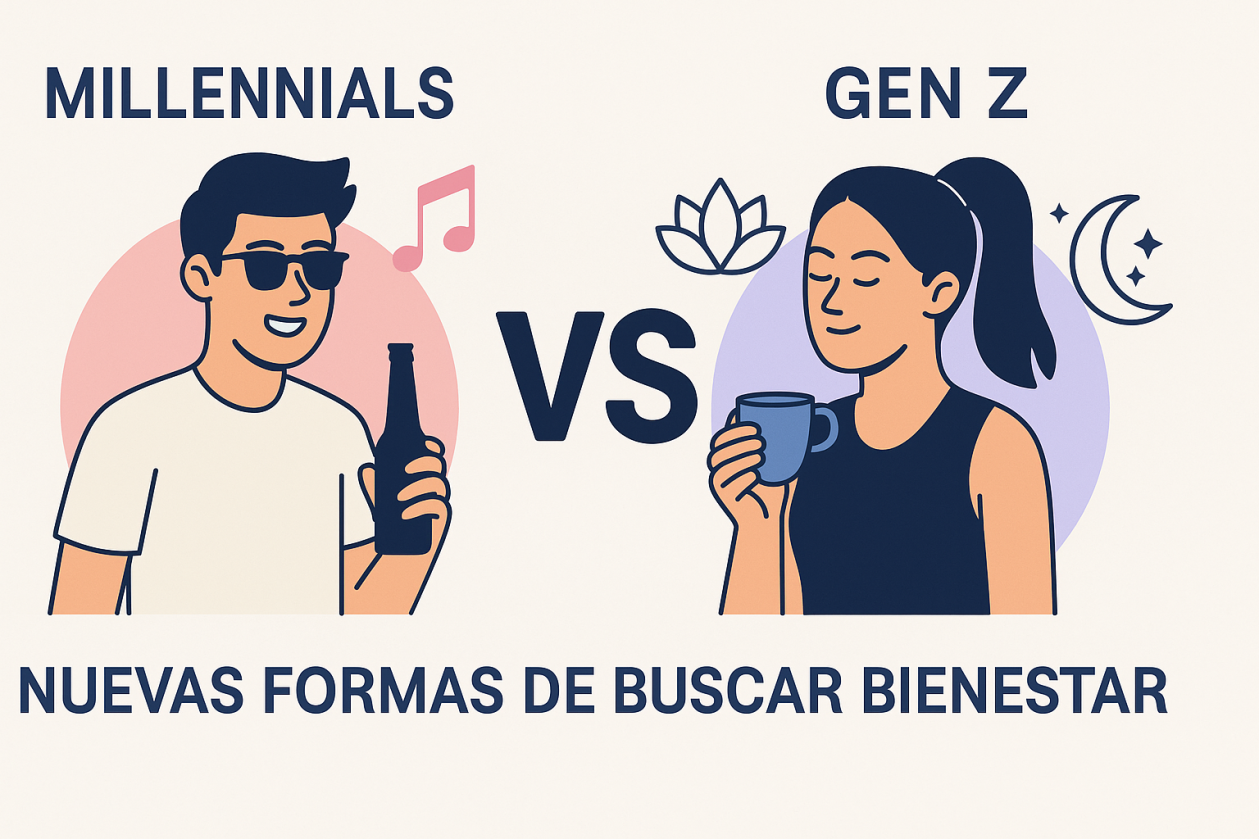
In this quiet shift, generations have carved out their own versions of health, rest, and satisfaction. Millennials—raised in a world between analog nostalgia and digital acceleration—grew up chasing freedom. Pleasure was spontaneity, intensity, rebellion. As adulthood hit, so did the need for balance—and self-care began to take root.
But it’s Gen Z who has redefined the landscape. Growing up with constant connectivity, information overload, climate crises, inflation, and digital burnout, their approach is less about indulgence and more about protection. Wellness isn’t escapism—it’s strategy.
They drink less, go to therapy more, meditate, and set emotional boundaries. Not because life is easier for them, but because they’ve inherited a complex world and are choosing different tools to survive it. Sometimes out of fear, sometimes from healing, and often with hope for something better.
While one generation idealizes spontaneity and the other leans toward control, the truth is every age group carries its emotional blueprint. Wellness is no longer a universal formula. It’s personalized, measurable, and sometimes... recommended by an algorithm.
Are we better off? There’s no single answer. What’s clear is that taking care of yourself in 2025 doesn’t look like it did in 2005. Maybe it’s not about partying all night anymore. Maybe it’s about resting, setting limits, and learning to be fully present.